
Beyond the Overthinking Trap: Working with the Mind vs. Working in Your Second Body
Most of us are trained to treat work as a purely mental sport. From the moment we open our laptops, we pull all our energy up into our heads, narrowing our focus onto screens, problems, and to-do lists. While our thinking mind is brilliant at solving puzzles, running it on overdrive without support eventually leads to mental friction, brain fog, and exhaustion.
There is another way to work—one that doesn’t require abandoning your sharp intellect, but rather placing it inside a much larger, calmer container. It is the shift from working only with the mind to working inside your Second Body.
What is your Second Body?
Before diving into how it changes your workday, it helps to define what this term means. When we talk about your Second Body, we aren't talking about physical muscles or bones. Instead, it refers to the subtle, energetic field of awareness that permeates and surrounds your physical form.
Think of it as the quiet, unified sense of aliveness and spaciousness you feel when you close your eyes and sense your entire body at once. While your physical body sits in a chair and your thinking mind analyzes data, your Second Body acts as a steady, grounded backdrop of presence that holds both.
Working with the Mind vs. Working in your Second Body
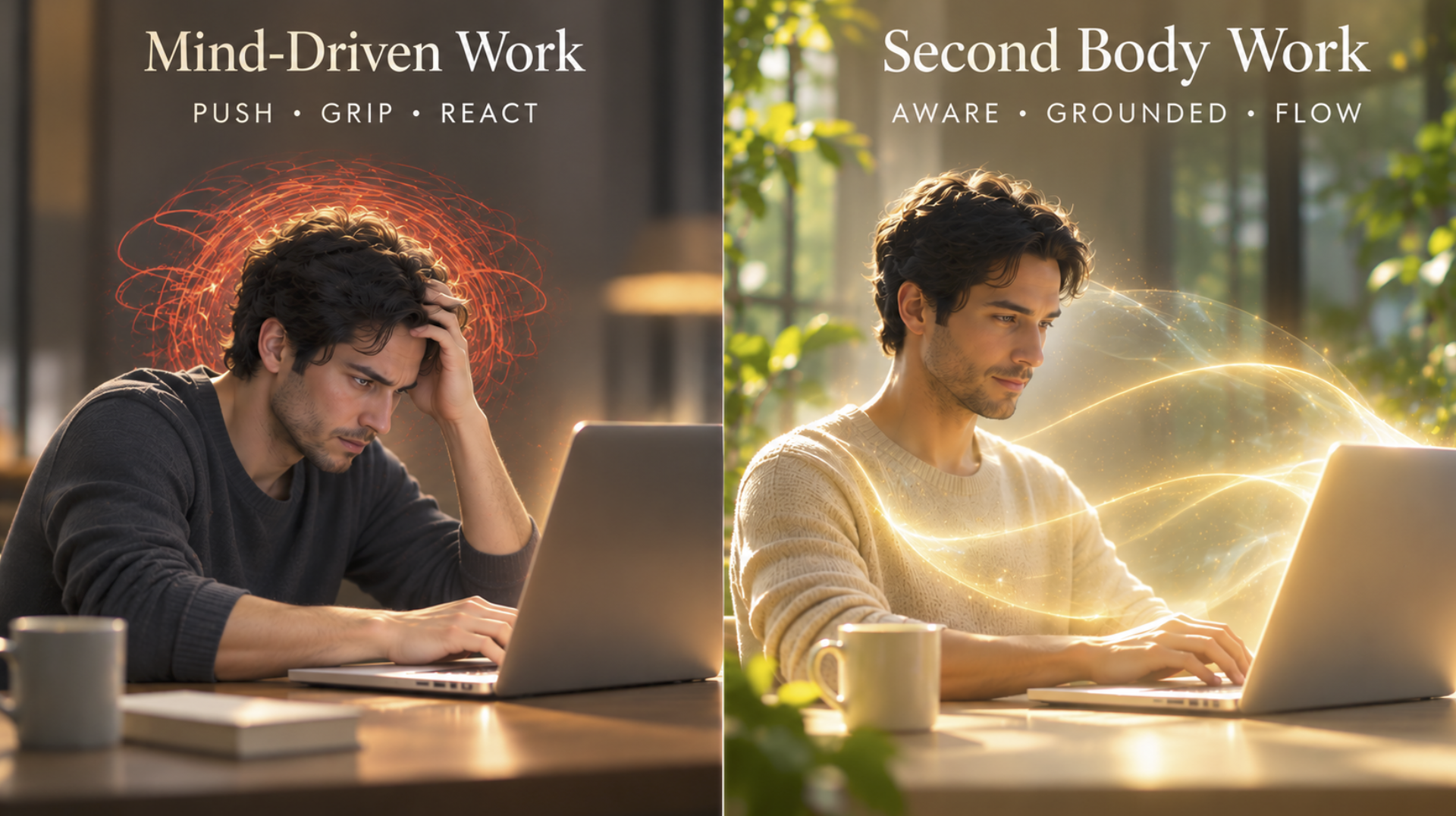
When you work exclusively from the mind, your center of gravity lives entirely behind your eyes. You treat focus like squeezing a muscle—pushing through resistance, gripping onto problems, and reacting quickly to every ping or deadline.
Over time, this tight, narrow beam of attention creates high mental friction. You merge completely with your stress, losing perspective until you hit a wall.
Working in your Second Body flips this dynamic. Instead of the mind acting as an overworked driver, it becomes a precise tool operating inside a wide field of subtle energetic awareness.
· Spacious Focus vs. Tunnel Vision: You can still zoom in on a complex spreadsheet or write a detailed email, while a quiet part of your awareness stays connected to the wider room and your body.
· Flow vs. Friction: Because your nervous system remains grounded in subtle energy, you spend far less fuel fighting stress and resistance.
· Clarity vs. Reactivity: Rather than getting swept away by urgent thoughts, you observe tasks unfolding inside a calm, supportive space, making decisions with both logic and grounded intuition.
Recognize when your mind hits its limit
Your mind will rarely announce when it is overloaded, so you have to watch for its early warning signs. Knowing when to step back is the key to maintaining balance throughout the day. Watch out for these common symptoms of mind-only fatigue:
· Physical tightening: Your shoulders creep toward your ears, your jaw clenches, or your breath becomes shallow without you realizing it.
· Looping thoughts: You re-read the same paragraph three times, second-guess simple decisions, or spin your wheels on a problem without making progress.
· Tunnel vision and irritability: Every small notification feels like an emergency, and you lose sight of the bigger picture.
· Heavy head, numb body: You feel buzzing mental pressure in your forehead while completely losing touch with how your body feels in your chair.
How to Switch and Rest in the Field
When you notice these symptoms, you don’t need to stop working for an hour or retreat to a meditation cushion. You can reset in less than thirty seconds right at your desk by shifting your attention back into the Second Body:
1. Soften your gaze. Look away from your screen for a moment and let your peripheral vision open up. Notice the walls, the light, and the empty space around your monitor without trying to focus on anything specific.
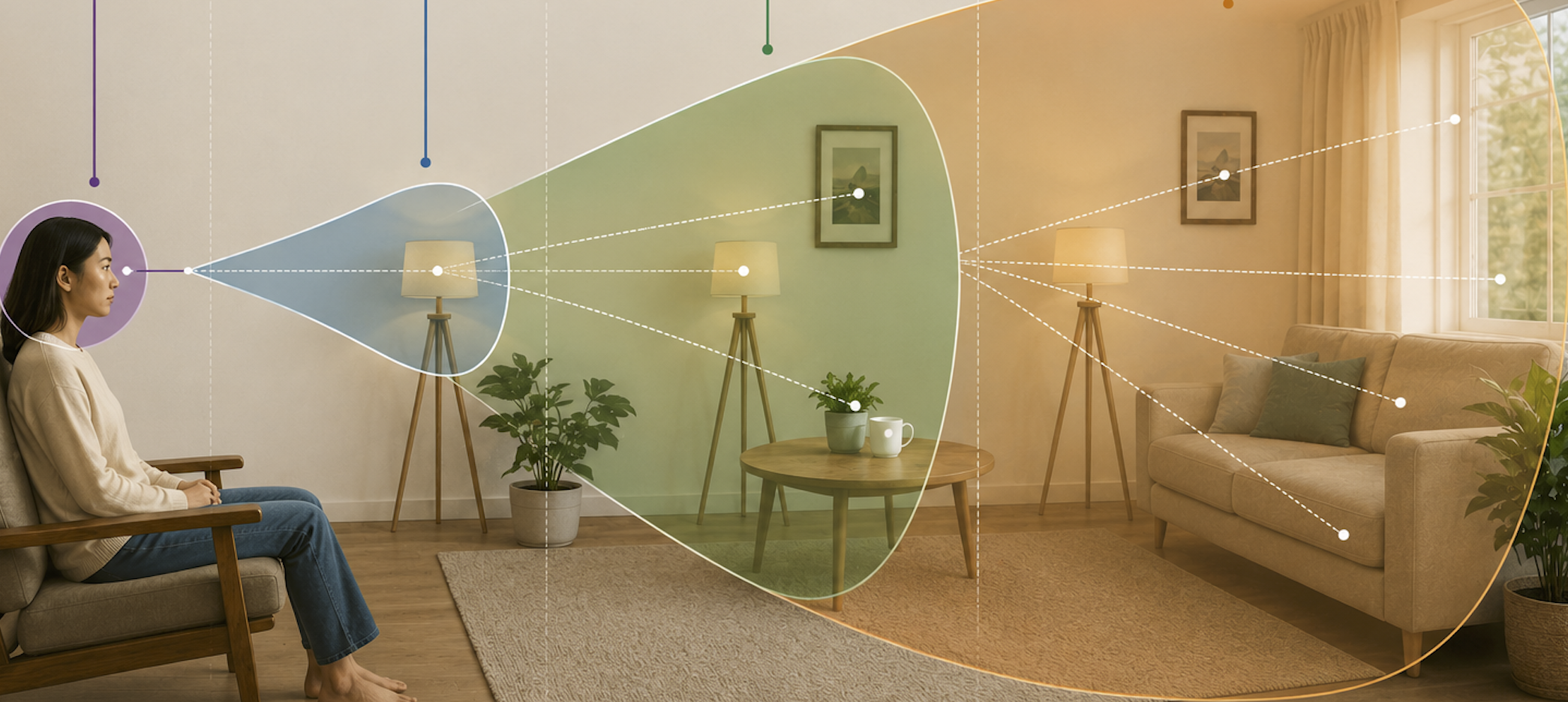
2. Drop your center of gravity. Gently pull 20% of your attention out of your head and let it sink down into your torso, your hands, and the subtle hum of energy inside your body.
3. Feel the surrounding field. Imagine your awareness doesn't stop at your skin, but extends a few inches outward into the room. Let your desk, your computer, and your current task simply rest inside that quiet field.
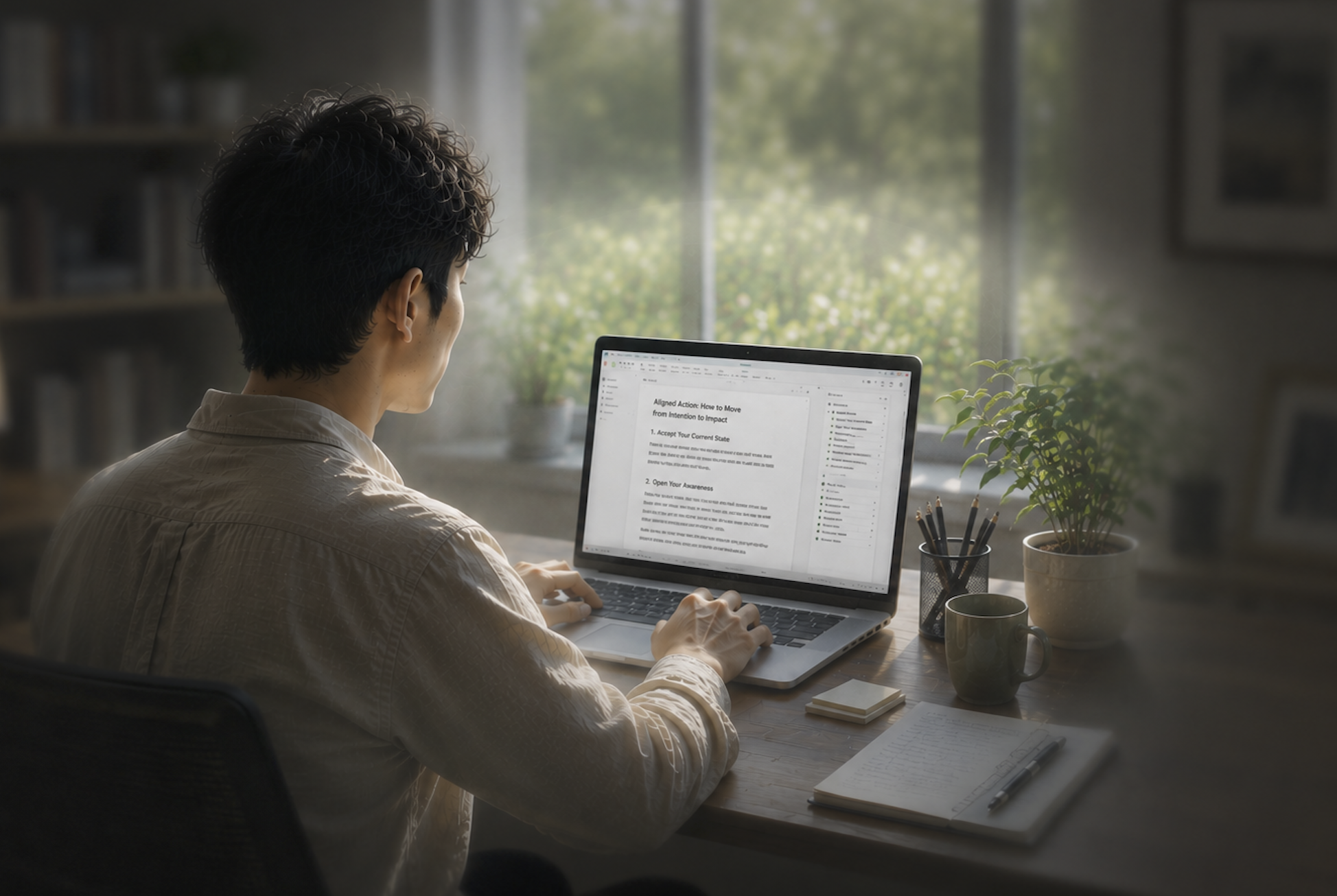
4. Take one slow breath. Allow your nervous system to settle into this wider space. Once you feel your energy rebalance and your head clear, invite your thinking mind back to the task—now supported by the steady foundation of the Second Body.

Work doesn't have to be a tug-of-war between getting things done and feeling peaceful. By learning to recognize when your mind hits its limit and resting back into the Second Body, you can restore your clarity, protect your energy, and bring true balance to your workday.